Introduction
Over the years there have been many Lasallian Projects in Kenya, but this was to be the first project based in an area of Kenya called Narok. Narok is a district as well as a city and is the main stop off point for people visiting the Masai Mara. One thing that became very obvious as soon as we arrived was that the local people were not used to having white people come and work with them. By the time we came to leave their opinion of us had changed. We were immediately made to feel incredibly welcome by all the locals and especially the community of Ewaso Nyiro, where we were building the nursery school. The Masai people traditionally are used to being talked into handing over their land for purposes that they have been told will benefit them, the work never gets done and they end up losing their land. This time they were expecting it to be pretty much the same story, so when we arrived and the work started they were so grateful and on several occasions local people of all ages would come to the site to help out with the work. Ewaso Nyiro was 15kM away from the Catholic Mission in Narok where we were staying, so every morning we had to either get a Matatu (taxi) or borrow the van from the nuns to get to work.
The Building of the Nursery
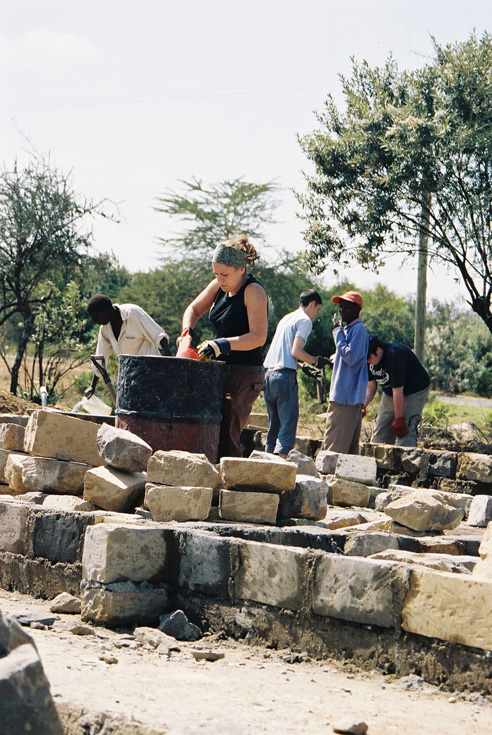
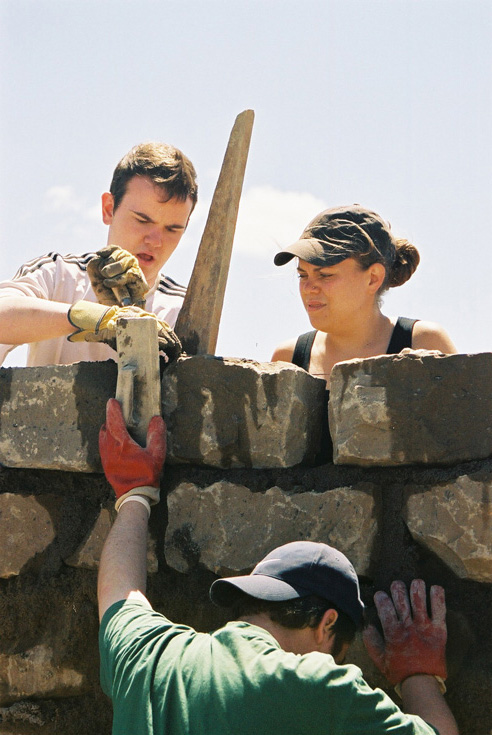
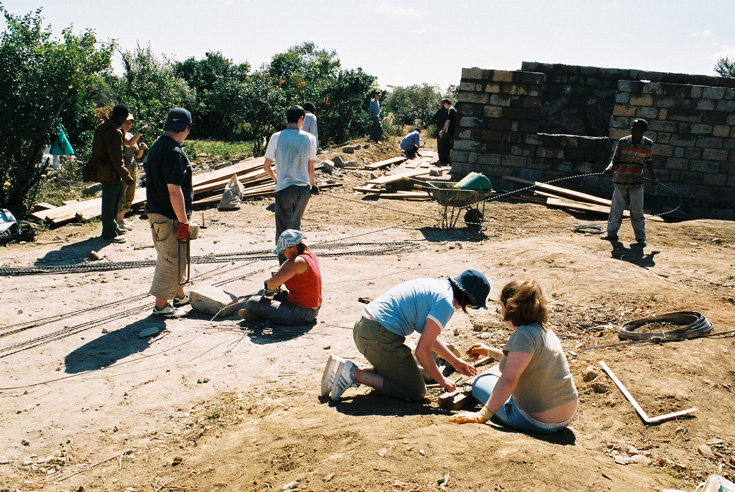
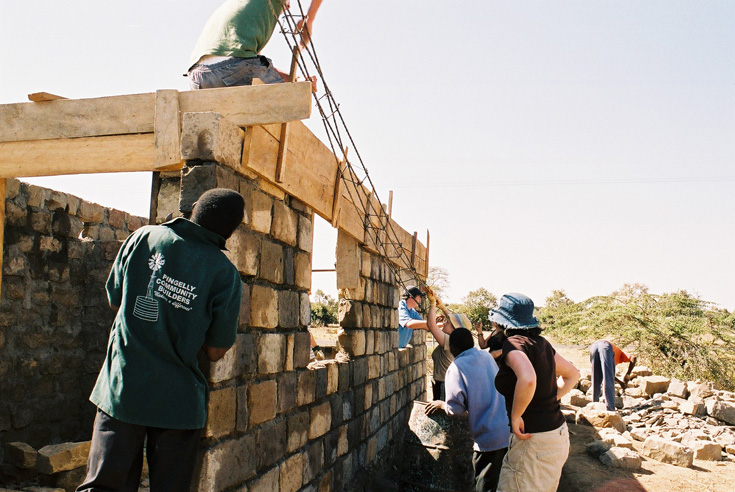
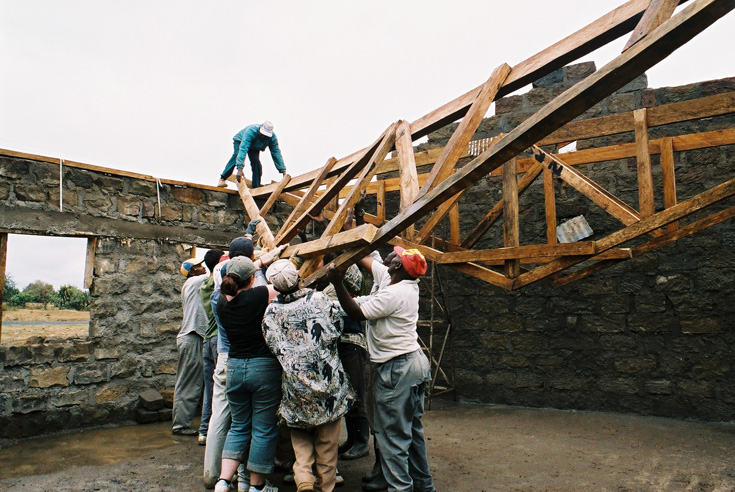
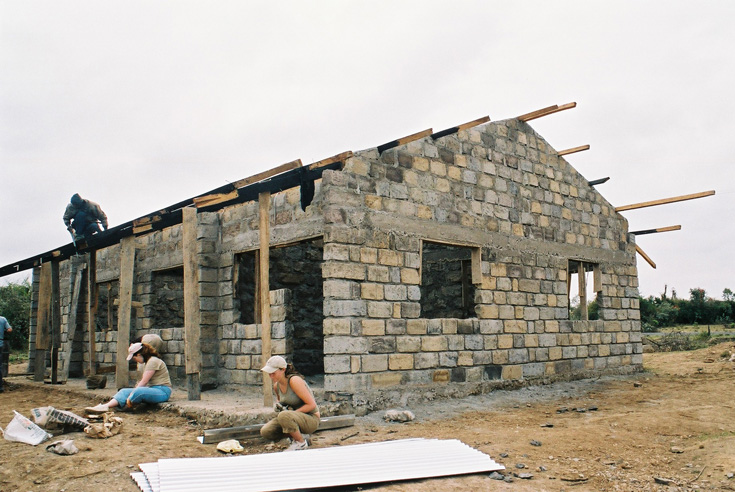
As none of us in the group are actually skilled workers we employed a group of local people to help with the work and to make sure we all knew exactly what we were doing. When we arrived the skilled workers had already dug and put in the foundations for the nursery. For us the work started with carrying the bricks to the site ready to build the walls. The bricks ranged in size and some were incredibly heavy to carry, but nevertheless we didn’t let this stop us. Once we’d carried enough bricks to begin the first few layers we were shown how to lay the bricks, fill the gaps and mix the mortar. The mortar had to be mixed by hand with spades and was very tiring work as it had to be mixed so many times before it was ready to be used. In total it took about two and half weeks of carrying bricks, mixing mortar, filling gaps and laying bricks before we finally hit roof level. There were roughly 16 layers of bricks to the roof. Before the roof could go on we had to put a layer of lintel along the top to support the weight of the roof. The lintel was made out of 4 long strips of thick steel cut to the size of the wall they were to go on, these were then held together in a cuboid shape by a slightly thinner piece of steel that had been bent into a rectangle shape by members of the group, very thin bits of steel were twisted around the 4 strips of metal and the rectangular pieces to hold them in place. Once all 6 pieces of lintel had been made, formwork was placed around the top of the wall for the lintel to be placed into and kept in place on top of the wall. Concrete was then mixed and poured over the lintel until it was completely covered. We then left this over night until it was set enough to remove the formwork. Over the next week we made the trusses for the roof. These were triangulated and made of wood. Each bit of wood had to be cut to size and then nailed together with 3 nails at each end. In total we made 10 trusses. The trusses were extremely heavy so it took all 10 members of the group and all the workers to help lift the trusses up onto the roof. Even though the trusses were so heavy we still managed to get all 10 trusses on the roof in one day. The workers decided to put the metal sheeting on the roof themselves as the sheeting was expensive so they didn’t want to risk us putting the nails in wrong and damaging the metal sheets. Instead we spent the final week doing site clearance and flattening out the land surrounding the nursery. To show their appreciation for our hard work the community of Ewaso Nyiro held a thank you ceremony at the nursery school for us, where they presented us each with a small gift and many of the locals did little speeches. The community also prepared songs and food for us; it was an amazing day. At the end we had a bit of free time to play with the children and talk to the adults. It was the perfect way to say our final goodbyes.
Visiting Schools
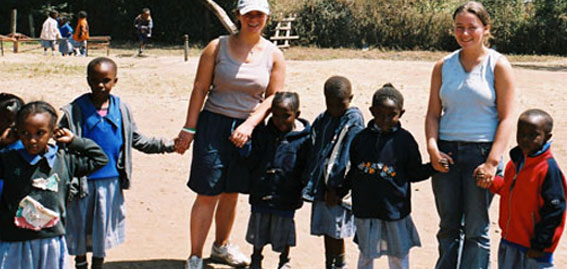
Most afternoons during the week we went to visit local schools as the workers finished work at 2pm everyday. We visited pre-schools, primary schools, secondary schools and even a polytechnic school. We didn’t really get much of an opportunity to teach the children but we did get the chance to meet the locals and see how the schools varied. Particularly at the pre-schools we got to the chance to hear them sing and play games with them such as the Hokey Cokey. Some of the afternoons we spent with the children laughing and playing, just seeing their little faces light up, are some of the most magical and special memories I have of the project. Some of the schools were able to offer better facilities than others, but generally those that did the children had to pay fees for. The schools out in the bush didn’t even have enough classrooms or teachers, most teachers taught 2-year groups at once in the same classroom. As the age of the children got older the fewer children there were in each class, mainly due to forced early child marriage, which was happening to girls as young as 11. Primary school education is compulsory in Kenya but after that it is not so many children have to leave as they were needed to earn money or just simply could not afford it. In some cases the children are unable to get the schools as it is just too far away or at some times of year the journey to school is too dangerous due to the wild animals in the bush.
Free Time/Experiences
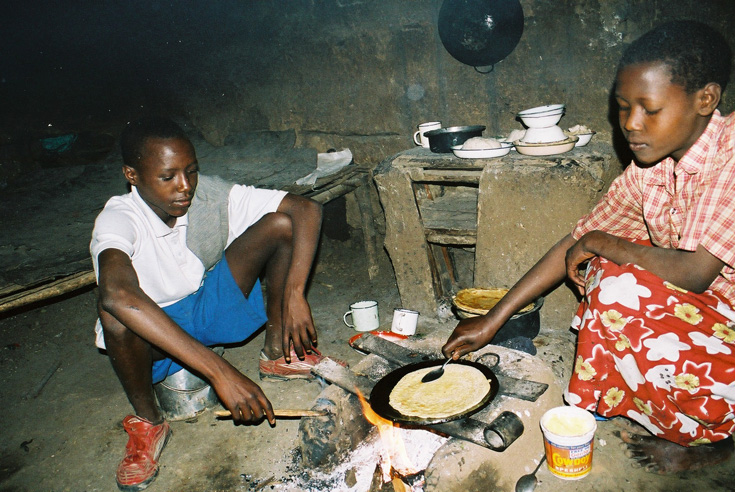
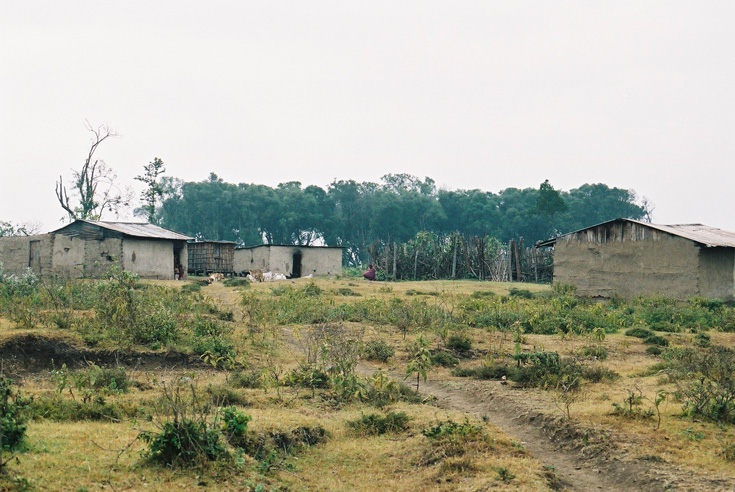
On the project we had the weekends for free time and excursions. We mainly used this time to go on trips to places such as the Masai Mara, Nakuru and Nairobi. Other weekends and evenings we used to get to know the members of our group and most importantly the local people. One night we were privileged to be offered the opportunity to go and see how the Masai people lived and to spend the night with a family, to me this had to be the most fantastic experience of everything we had the chance to do or see. The Masai families live in groups of homes called Bommas and individual family homes called Manyatas. Generally they all live out in the bush where everything is natural, they do not have running water or electricity as they believe their homes are like the womb so they only have the natural light from the fire which they leave burning all the time. Their homes are made mostly of wood and mud. The Masai families also keep their own animals for meat, eggs, milk and income. To show our gratitude to the families we took them gifts of sugar, Ugali flour (maize flour) and Chai (tea). Ugali is made of water and Maize flour and is one of the staple foods in Africa.
Conclusion to the project
In general to sum up, the project was very successful. The nursery school has been finished on time and the local community was extremely happy with our work. We have also been fortunate enough to make many new friends in Narok and to have countless amazing memories and experiences that will stay with us for the rest of our lives. This project was definitely worthwhile and so another group will be going out there to continue the development in 2006. Thank you for your support.